
CEBU CITY – Ever since my college days, I have always dreamed of operating my own liquor bar where my fellow enjoyer of the spirit can peacefully coalesce to ponder and talk about life’s musings. This year, an opportunity finally came along to turn this dream into reality. However, as I looked into the accounting projections, it seems more than likely that this dream business of mine will be in the red which meant that I would have to subsidize its operations for at least the first year.
Given that this is my passion project, I do not really expect to make money from it. I am doing this more for the satisfaction of the soul rather than the nourishment of the wallet. Unfortunately, the soul does not pay rent, electricity, salaries, and other operating expenses.
Since I am not a rich man nor a member of a rich family, I have to find a way to reduce the amount of money I would throw into this endearing financial black hole. Henceforth came the idea of operating a coffeeshop during the day while my dream speakeasy cocktail bar will take over during the night.
This Bar + Café setup is nothing new and has been done in several establishments in Cebu and Makati so the dreamer in me dreams that somehow I will also find a way to make this work.
There was, however, one tiny problem. I do not drink coffee.
I knew virtually nothing about coffee, let alone how to operate a coffee shop. I was basically planning to open a coffee shop without actually knowing anything about coffee. The audacity in me is indeed ridiculously staggering!
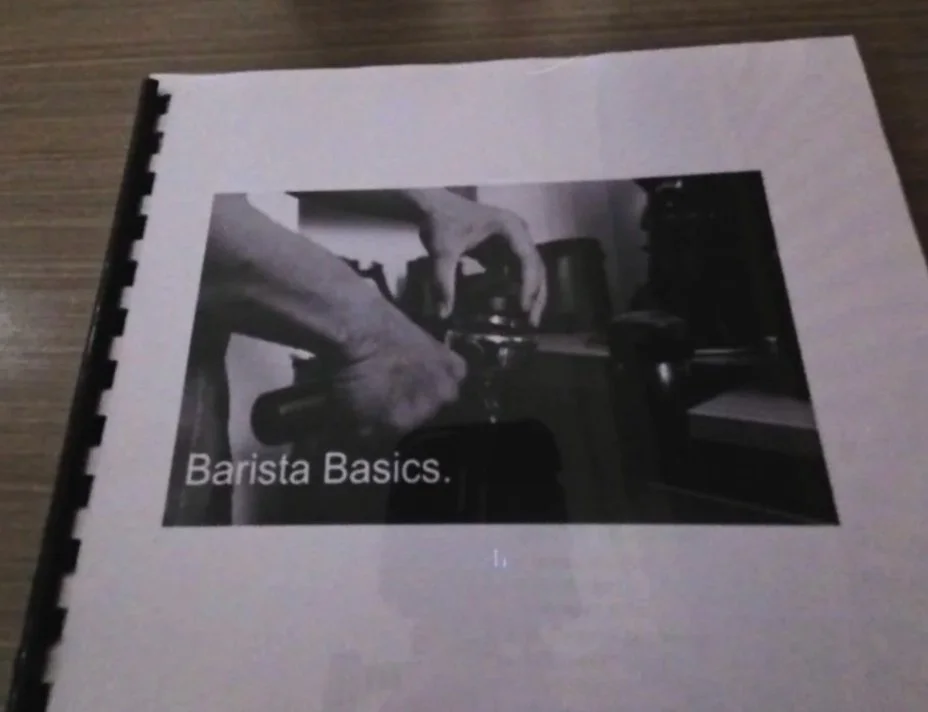
I found myself talking about this predicament to my good friend, Clang2x, a real estate mogul based in Lapu-Lapu City, who by some happenstance, is also planning to open her own coffeeshop in one of her commercial spaces. She then told me how she and her boyfriend had a lovely date attending a Barista Basics Course conducted by Cebu Coffee Solutions and encouraged me to take the same course as it would give me a good foundation not only in coffee but also in the actual business of running a coffee shop.
So, like a curious cat who had suddenly developed an interest in caffeine, I enrolled myself in the course.
And off I leaped to coffee school!
Day One: Learning that Coffee is a Science
The Barista Basics Course by Cebu Coffee Solutions is a two-day class held at a condominium unit in Mabolo, Cebu City.
The first day focused primarily on the theory and sensory aspects of coffee, while the second day was devoted to the actual preparation of coffee such as manual brewing, espresso-making, milk steaming, and latte art.
As I made my way to the first day of class, two fears began creeping into my mind.
First, I was worried that the other participants are serious coffee lovers. After all, why would you spend money taking a coffee course if you do not even like coffee? It could then be possible that I am the only one in the room who could not tell the difference between a beautifully roasted coffee bean and something that had been accidentally burned in the kitchen.
Second, I wondered if the other participants are couples attending the course as a date.
I am a boring man and nobody wants to do things with me. So, imagine me walking into a room filled with couples learning how to make coffee together while I sat alone in a corner, emotionally supported only by my notebook hahahaha. Okay, maybe that was a little dramatic.
Thankfully, when I met the other participants, I was relieved to discover that no dates are due to take place. Guess I booked the right schedule hahahaha.
There were six of us in total.
One was a middle-aged man who recently returned from the United States. He wanted to learn more about coffee so he could improve his coffee-brewing skills at home for his wife, which I found really sweet. . .like Arabica ha ha ha.
There were also two young sisters who were planning to open their own coffee shop.
Then there was a mother and daughter who were already operating their own coffee shop and wanted to learn more about the business.
And then there was me, the lame guy who knew absolutely nothing about coffee.
A very diverse group, indeed.
Coffee Theory, Minus the Boredom
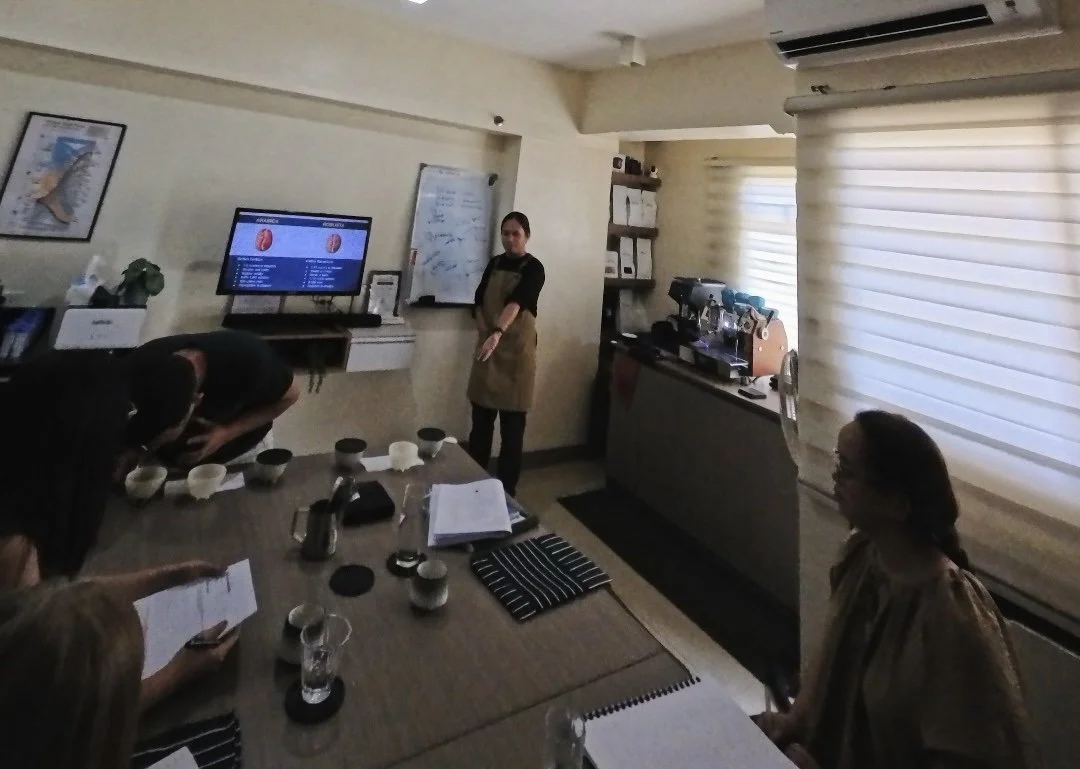
The first day of the Barista Basics Course was handled by two instructors who are well-credentialed barista champions with overseas experience. What immediately stood out was how friendly and approachable they were. They explained the lessons clearly and were very accommodating in answering questions from the participants.
You could tell that they knew what they were talking about and, more importantly, they knew how to teach it.
The first day was understandably heavy on theory, which is usually where my attention span starts quietly packing its bags and leaving the room. But the instructors managed to keep things lively through their stories, demonstrations, and willingness to engage with the class.
My fear of knowing absolutely nothing about coffee quickly vanished since whenever I had a question, no matter how basic or embarrassingly obvious it sounded, the instructors were more than willing to explain it.
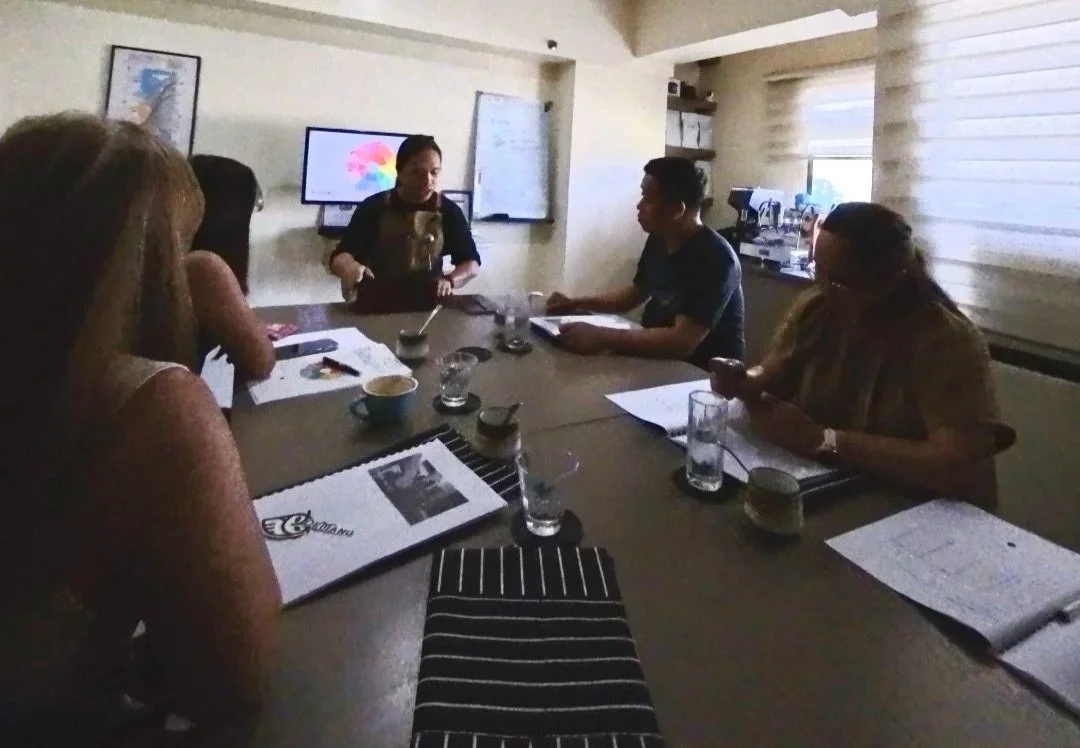
I also realized that the quality of the discussion depends not only on the instructors but also on the questions being asked by the participants. We were particularly fortunate to have participants who were already operating their own coffee shop. They asked questions based on their actual experiences as business owners, which gave the rest of us a glimpse into the real-world challenges of running a coffee shop.
So, if you are planning to take this course, prepare your questions beforehand. Write them down. Bring them with you. Do not be shy about asking them.
You might think your question is too basic, but chances are, somebody else in the room is wondering about the same thing.
From Bean to Cup
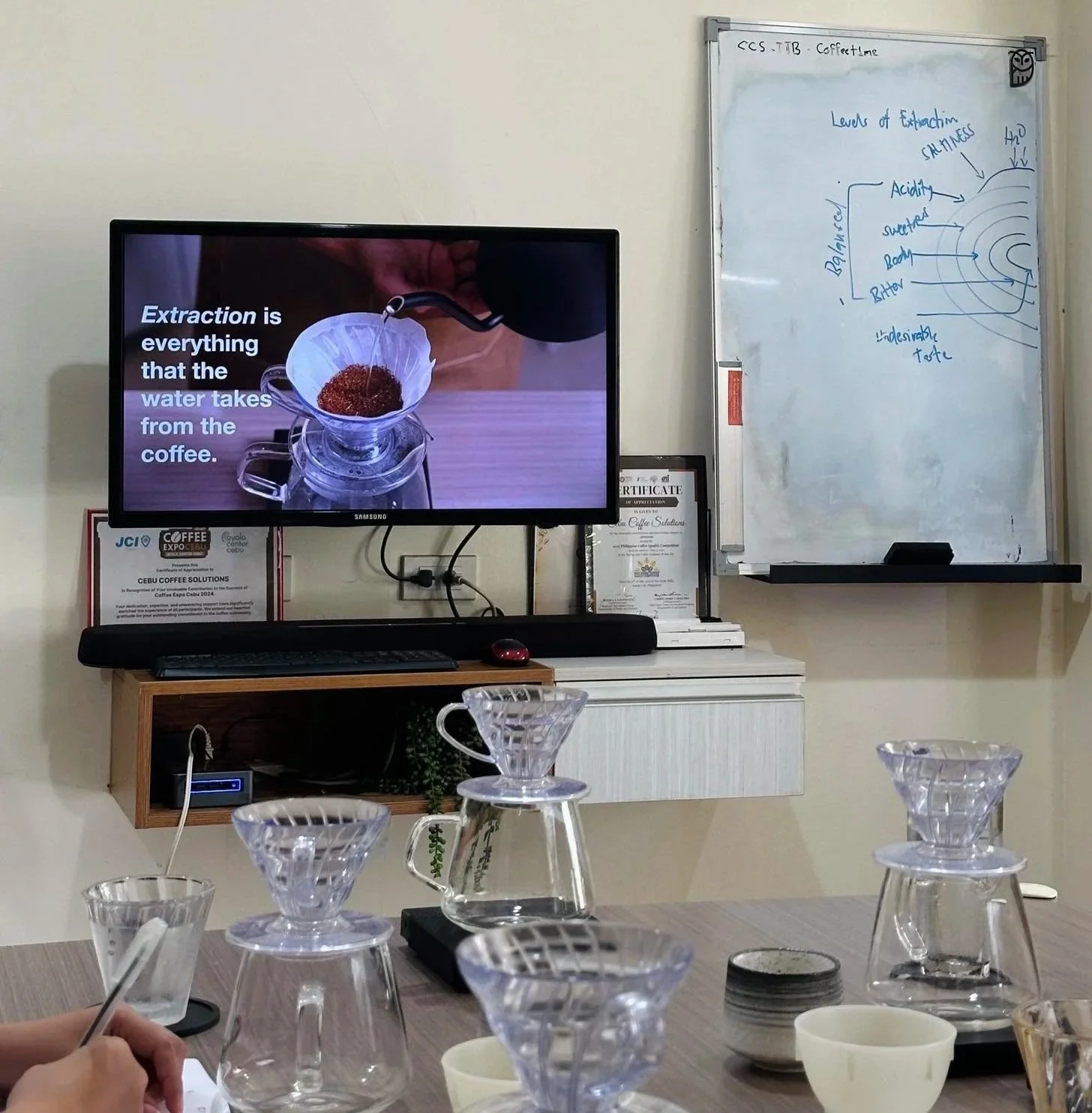
During the first day, we discussed the history of coffee and went through the entire journey of the humble coffee bean from its farming to processing to roasting. We also learned about the different quality classifications of coffee beans and why these distinctions matter.
Basically, I came into the classroom thinking coffee was simply coffee. I left realizing that coffee has been living a much more complicated life than I have.
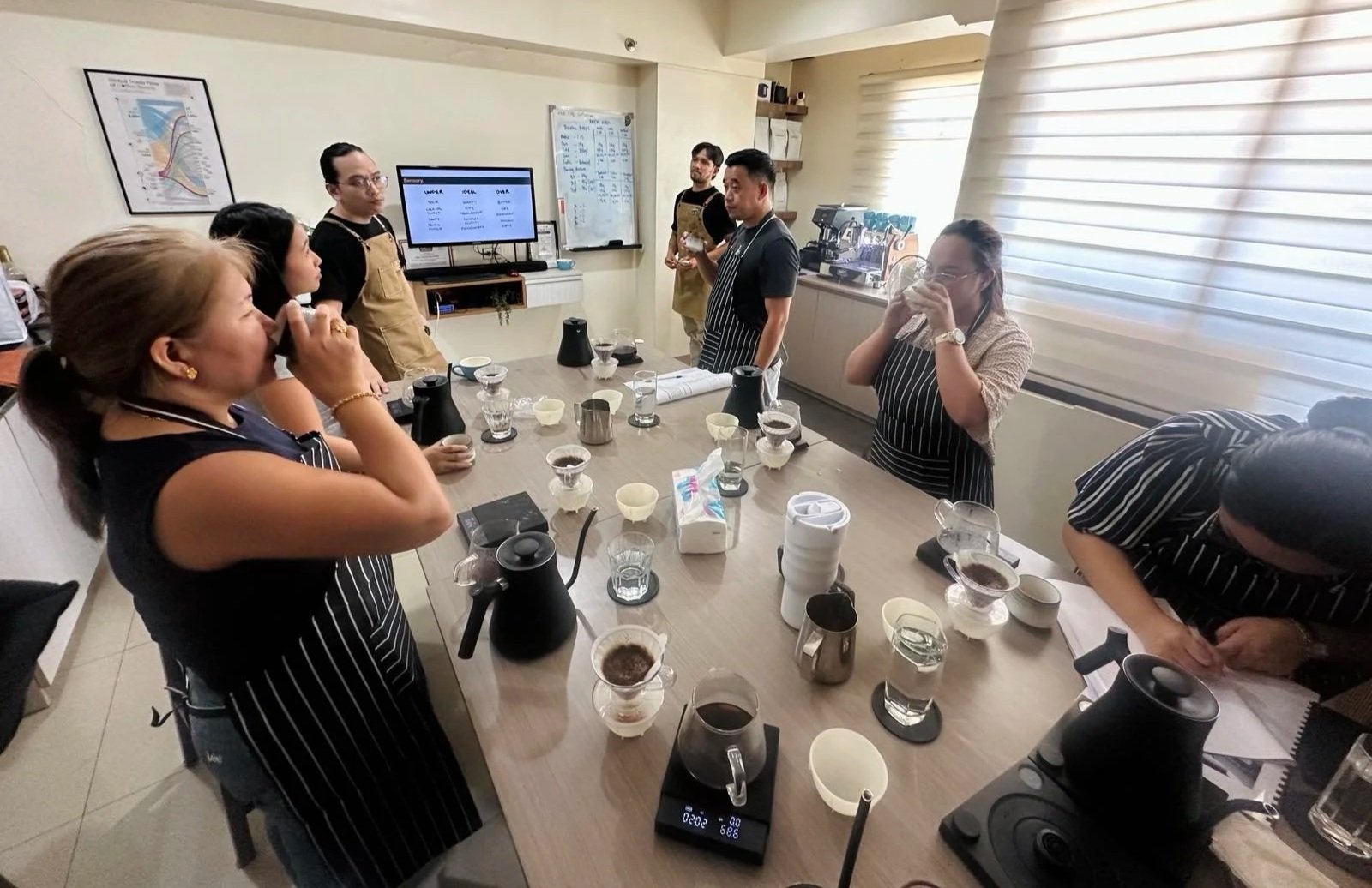
The part I enjoyed the most during the first day was testing our sensory skills to identify the different flavors and aromas found in coffee. We did coffee cupping, which basically involved slurping coffee in a way that would probably be considered rude at a normal dinner table. Here, however, it was encouraged.
The objective was to determine, based on our sense of taste, whether the coffee used was Specialty Arabica, Commercial Arabica, Fine Robusta, or Commercial Robusta. We also evaluated the coffee based on its fragrance, aroma, acidity, sweetness, bitterness, and other sensory qualities.
We then tested our olfactory skills or in simpler terms, our sense of smell.
For this, we used the Le Nez du Café aroma kit, which contains small bottles representing different aromas commonly associated with coffee. The instructors would hand us these tiny bottles, and we had to smell them and identify what fragrance they reminded us of.
I discovered that my sense of smell was not exactly going to win any awards.
Out of ten, I scored a spectacular 1/10. Yes. One. Uno. Piso.
But strangely enough, I enjoyed the activity since some of the aromas triggered childhood memories and familiar experiences that I had completely forgotten about. It was interesting how a simple smell could suddenly transport you to a particular place or moment in your past.
Apparently, my nose is terrible at coffee but excellent at unlocking memories.
A Full Day of Coffee
We started the class at around 10:00 a.m. and finished at around 5:00 p.m., with a one-hour lunch break in between.
The course fee already included a packed lunch, which was a welcome addition because learning about coffee for seven hours can make a person very hungry.
By the end of the first day, I learned about coffee farming, processing, roasting, sensory evaluation, coffee classification, and a whole vocabulary that I previously did not know existed.
And this was just Day One.
Day Two: Things Get Serious
The second day was handled by another two instructors, who were likewise well-credentialed and experienced barista champions. This time, we moved away from theory and into the actual preparation of coffee.
We brewed coffee. We made espresso. We steamed milk. And, eventually, we attempted the ever mysterious latte art.
This was the day when I realized that making coffee is not simply a matter of putting coffee into a cup and adding hot water. There are rules. Many, many rules.
The V60 Experience
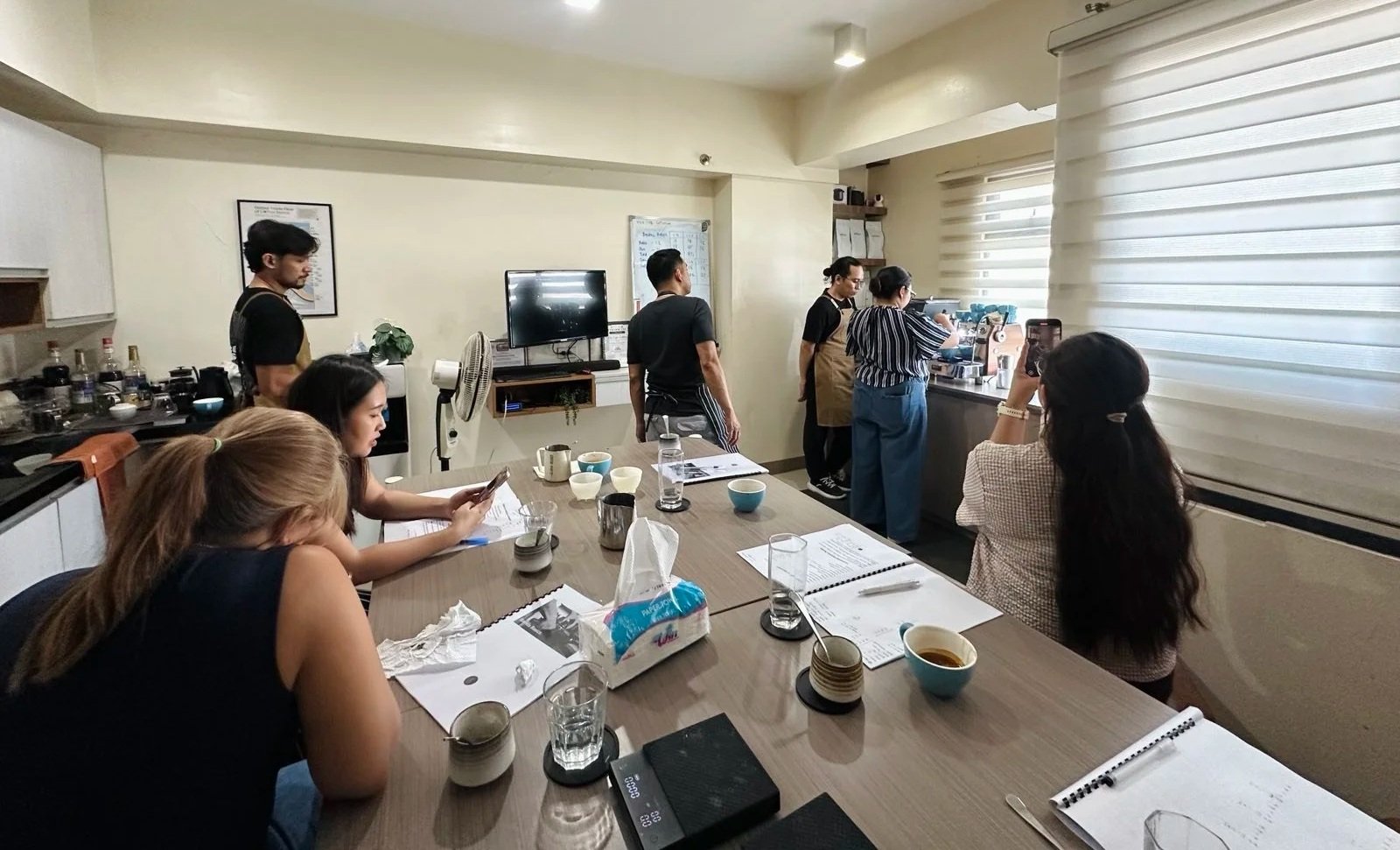
For manual coffee brewing, we used the V60 method and followed a baseline recipe that considered several variables such as the coffee-to-water ratio, dose, yield, brewing time, taste, and pouring structure.
This was when I realized just how technical coffee brewing can be.
You have to consider the quality and density of the water, the temperature of the water, the weight of the coffee, the amount of water being poured, the timing, and the manner in which the water is poured.
My initial idea of “just make coffee” now seemed incredibly naive.
It turns out that coffee has standards.
Coffee has measurements. Coffee has timing. Coffee has technique.
Coffee has expectations.
My First Espresso
After learning the V60 method, we were taught the proper procedure for making espresso using an espresso machine.
This was my first time operating one. Naturally, I approached the machine with a great deal of caution as I had absolutely no intention of becoming the first student to accidentally destroy an expensive espresso machine.
The process was, once again, technical.
There were several steps to follow, from operating the grinder and preparing the coffee grounds to properly tamping the coffee, locking the portafilter into the machine, and timing the actual extraction.
Everything had to be done with a certain degree of precision.
I began to understand why experienced baristas can make the whole process look so effortless.
Meanwhile, there I was standing in front of the machine trying to remember which button I was supposed to press.
My Attempt at Latte Art
After espresso came Café Latte and, of course, the moment I had been both looking forward to and quietly dreading: Latte Art.
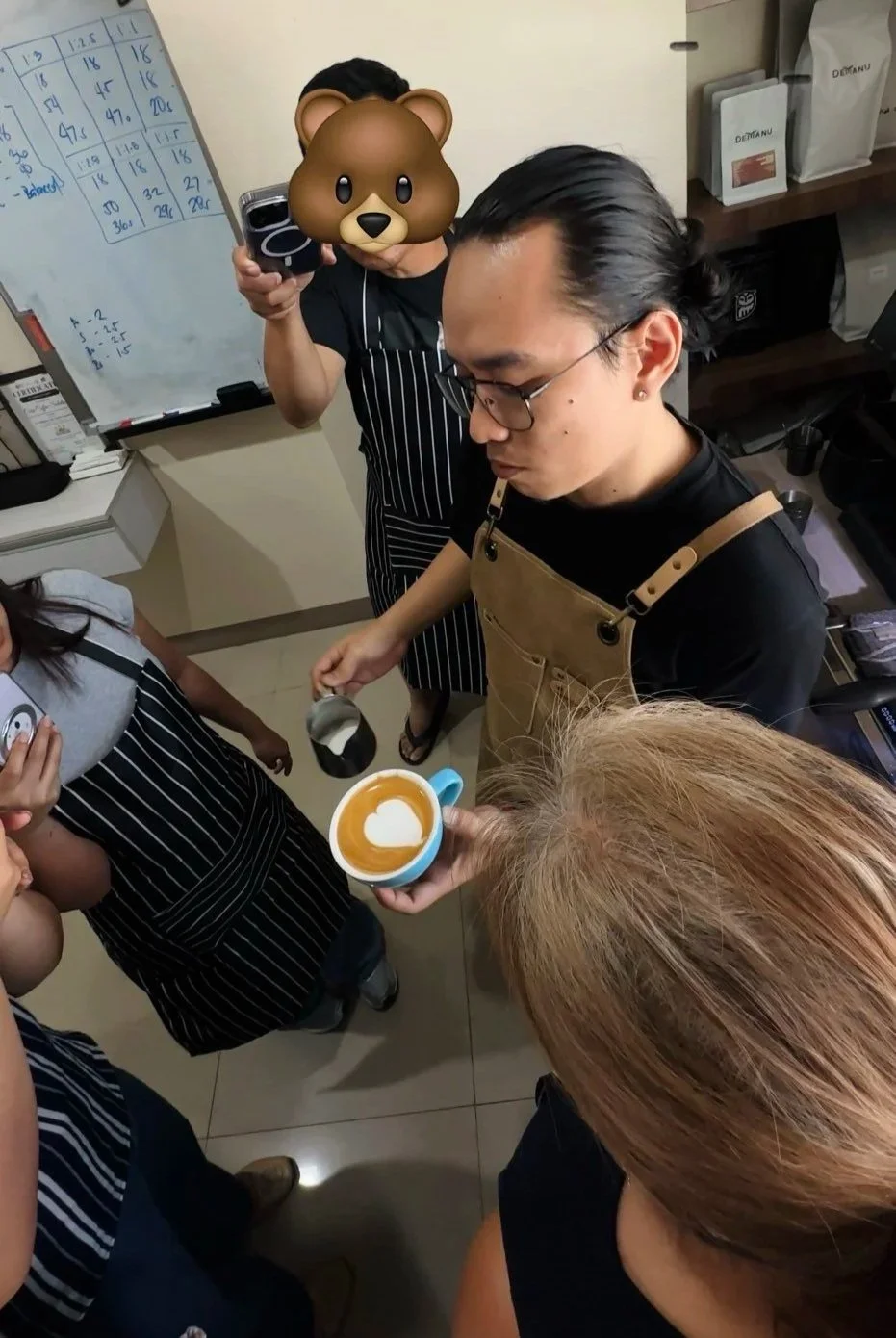
We were taught how to steam milk properly and then pour it into the espresso to create patterns on the surface.
The instructors demonstrated how to make a simple heart.
It looked beautiful. Simple. Elegant. Effortless.
Then it was our turn.
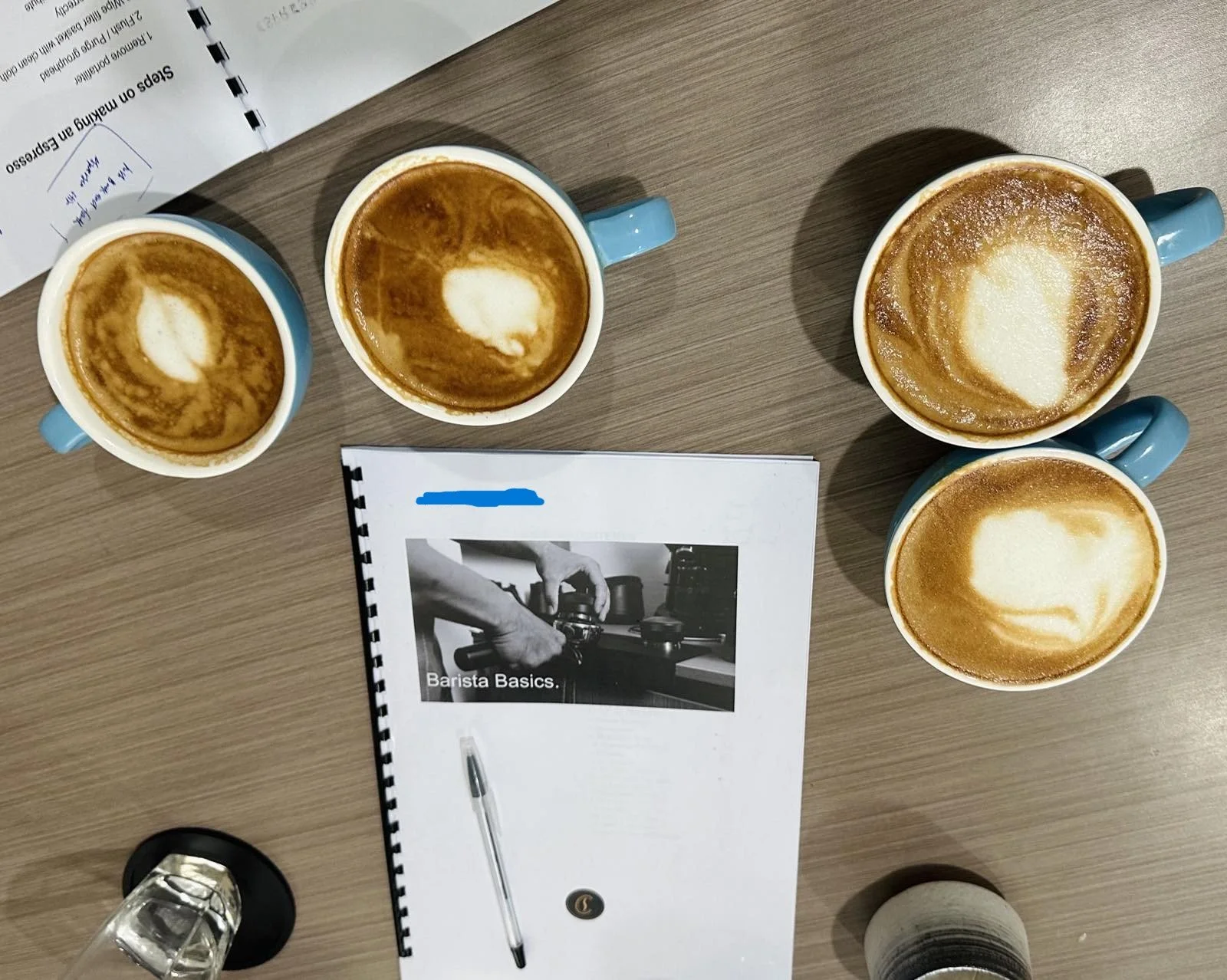
I tried to recreate the heart. What came out of my cup though is heartache.
The others managed to produce something that at least resembled a heart.
Mine? Let us just say that the shape is in the eyes of the beholder, so if I say I saw a heart, then I saw a heart! Hahahaha.
Perhaps the real lesson here was not latte art.
Perhaps it was humility. Sit down! Be humble!
The End of the Course
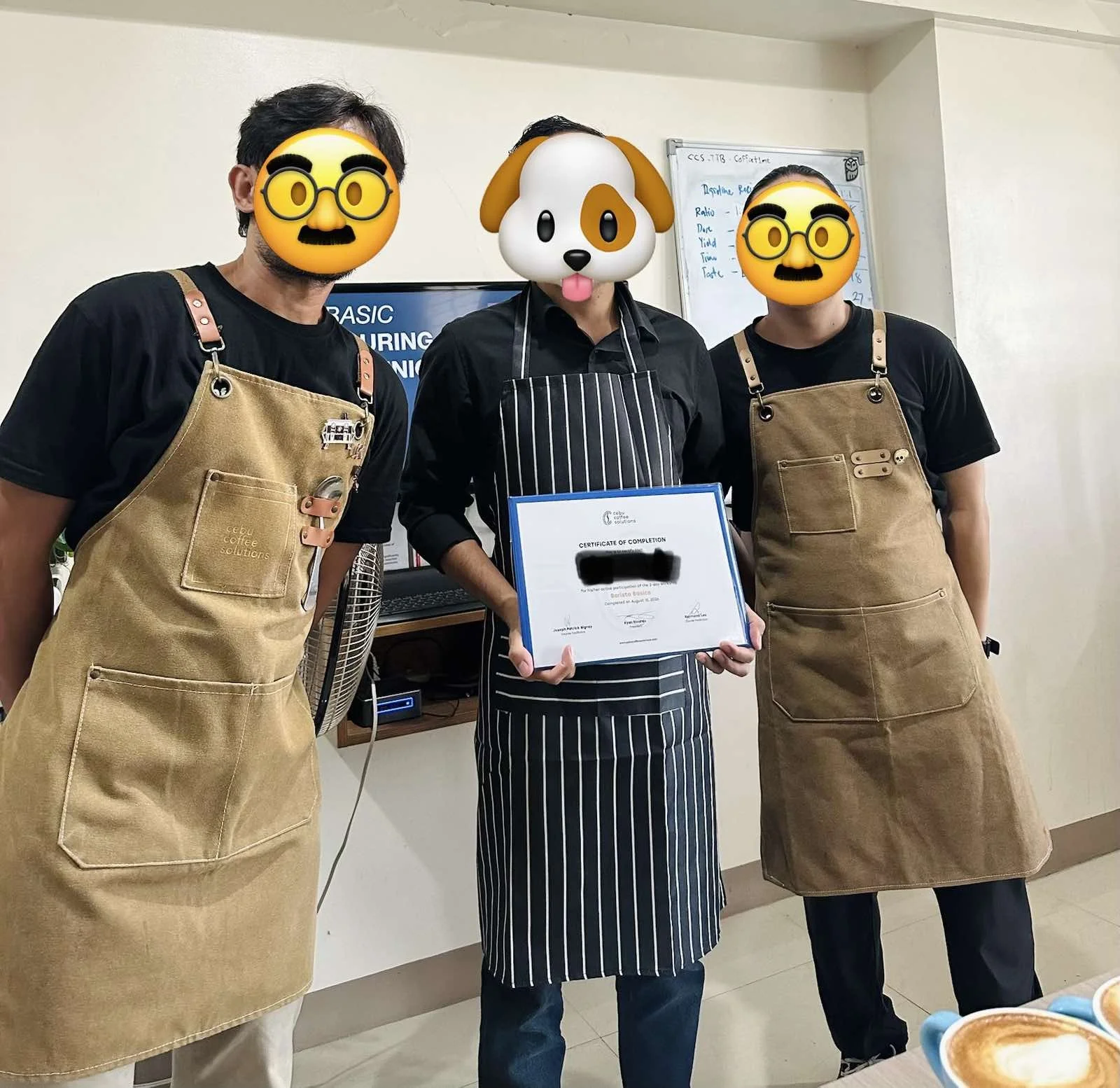
The two-day course culminated with each participant receiving a Certificate of Completion for the Barista Basics Course.
But the learning does not necessarily have to end there.
The course also includes a coffee shop immersion at their Three Two Brew coffee shop. Participants can schedule a visit to observe the operations of an actual coffee shop, preferably during opening or closing hours.
This allows you to see what actually happens before the first customer walks through the door and what needs to be done after the last customer leaves.
You simply need to coordinate with them beforehand and schedule the day you intend to visit.
For someone like me who is considering opening a coffee shop, this is particularly useful because there is a huge difference between learning about coffee in a classroom and actually seeing how a coffee shop operates in real life.
Was It Worth It?
Overall, I found the experience worth its price.
I came into the course knowing practically nothing about coffee, and I left with a much better understanding not only of coffee itself but also of the business behind it.
I was able to ask numerous questions about coffee preparation, equipment, coffee shop operations, and the things I would need to consider if I eventually decided to pursue my own coffee shop.
And, once again, I cannot emphasize this enough: Prepare your questions beforehand. Write them down. Bring them with you. Ask away.
The instructors are very open to questions and are willing to share their knowledge and experience. You will get much more out of the course if you actively participate instead of simply sitting there and waiting for the clock to hit 5:00 p.m.
If you are interested in taking the Barista Basics Course, you may contact Cebu Coffee Solutions through their Facebook page.
At the time I took the course, the fee was ₱6,800, with a ₱1,000 down payment and the remaining balance payable on the first day of the course.
And Then There Was Coffee
I started this little adventure with absolutely no interest in coffee. In fact, I was only trying to learn about coffee because the financial realities of running a bar demanded that I have to sell coffee during the day.
I did not expect to become particularly interested in it.
But somewhere between coffee slurping, smelling tiny bottles, operating an espresso machine, and producing a latte art creation that looked nothing like a heart, something changed.
I started becoming curious. Then interested.
And now, perhaps even a little bit in love with coffee.
I guess the thing about life is that it has a funny way of introducing us to things we never thought we would like but end up capturing our interest. Thus, it is important to keep an open mind.
You never know. You might discover a new passion. You might discover a new business.
You might discover a new version of yourself.
Or, in my case, you might simply discover that your nose is terrible at identifying coffee aromas.
Either way, it is probably worth giving things a try.
And who knows?
Maybe one day, you will find me behind a bar serving cocktails at night and coffee during the day.
If that happens, please order something. I have a business to save.
And apparently, a coffee shop to run.
